
Your Employees Probably Know Why People Are Leaving
Turnover rarely surprises the people who work the floor. The surprise is how long it takes leadership to hear what staff already discuss off the record.
When "everything seems fine" is the default
Leadership meetings often run on lagging indicators: revenue, headcount, last month's turnover rate. By the time those numbers move, frontline staff have usually lived with the underlying friction for months: recurring guest complaints, broken handoffs, a manager who snaps in huddle, schedules that never stabilize.
That gap is not always denial. Many businesses reward calm surfaces without meaning to. Raising a messy operational issue can feel like creating conflict or getting labeled difficult. Morrison and Milliken describe how organizations develop organizational silence, where employees withhold concerns rather than raise them through official channels (Morrison & Milliken, 2000).
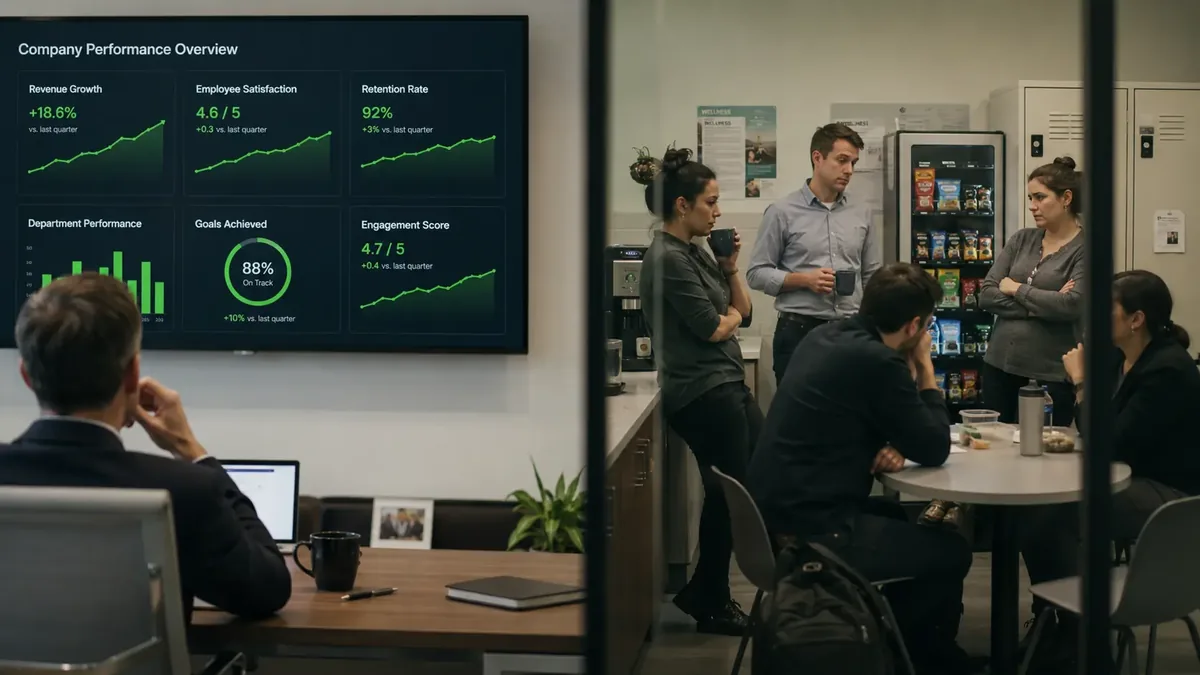
Staff see patterns before leadership does
Employees notice when the same register jams every Saturday, when one shift always gets shorted on breaks, or when three strong hires quit the same team in a season. Those are early warnings, not gossip. Detert and Edmondson find that employees often withhold even improvement-oriented ideas when they expect indifference or negative consequences (Detert & Edmondson, 2011).
Exit interviews arrive late. Anonymous rollups can surface the same themes while people are still employed.
Honest feedback vs. "safe" feedback
Safe feedback protects relationships: "Communication could be better," "We're stretched thin." Honest feedback names what would change the week: favoritism on scheduling, a lead who never follows through, training that never happens, steps that waste an hour per shift.
In team research, psychological safety means believing you can speak up without humiliation or punishment (Edmondson, 1999). That takes time to build. While trust is still uneven, anonymous capture lowers the social cost of being specific so leaders hear operational detail without asking one person to carry the message alone.
What recurring themes look like in practice
- Understaffing: Overtime, missed breaks, and quality slips guests feel before HR sees quits rise.
- Manager conduct: Inconsistent standards, public criticism, or favoritism that training decks never mention.
- Broken processes: Workarounds everyone uses because the official procedure does not match reality.
- Scheduling: Last-minute changes, unfair weekends, no recovery between close and open.
These rarely show up in customer reviews first. They show up in side conversations, then in turnover, and only later in leadership dashboards if someone connects the dots.
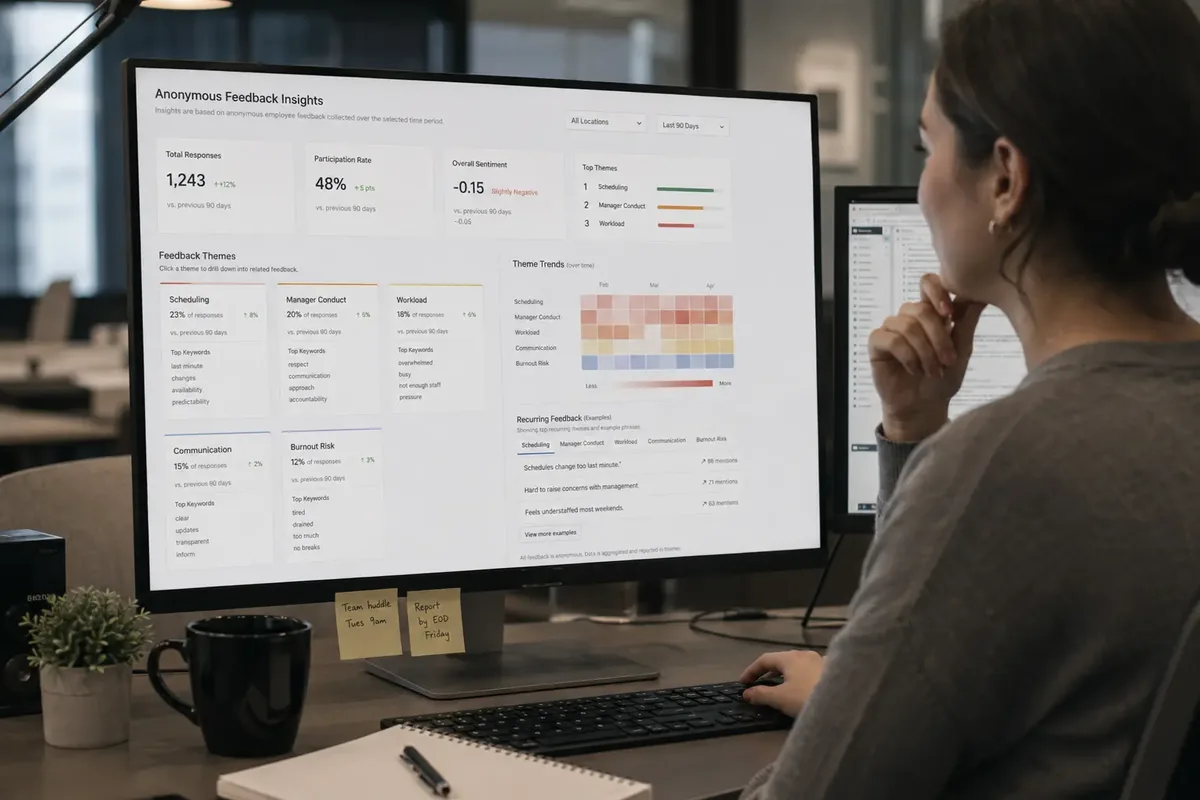
Anonymous channels for operational issues
A private employee channel is not a vote of no confidence in your managers. Hierarchy, history, and awkwardness filter what people say out loud. Used well, anonymous feedback complements skip-levels, engagement surveys, and open-door time. It catches recurring operational issues at volume without turning every submission into a personnel investigation.
Healthy use means acting on themes, protecting anonymity, and pairing insights with visible fixes. Punishing vague complaints or hunting for authors trains people to go quiet again.
How MaskedReviews fits
MaskedReviews gives employees the same neutral capture layer as customers: short private submissions, no account required for respondents, and rollups that highlight recurring themes without exposing who wrote what. Operators see turnover drivers earlier; teams are not reviewed line-by-line.
References
- Morrison, E. W., & Milliken, F. I. (2000). Organizational silence: A barrier to change and development in a pluralistic world. Academy of Management Review, 25(4), 706–725. doi.org/10.2307/259200
- Detert, J. R., & Edmondson, A. C. (2011). Implicit voice theories: Taken-for-granted rules of self-censorship at work. Academy of Management Journal, 54(3), 461–488. doi.org/10.5465/amj.2011.61967925
- Edmondson, A. (1999). Psychological safety and learning behavior in work teams. Administrative Science Quarterly, 44(2), 350–383. doi.org/10.2307/2666999
Join Early Founder ($5 for 90 days)
Give staff a private channel to flag turnover drivers while you work on the culture that makes direct conversation easier.
Early Founder: $5 for 90 days, then $10/mo locked for life. Standard pricing will be $19.99/mo.